

January 23, 2012

Costa Concordia Disaster Brings Hard Look at Cruise Ship Safety

Thinking about booking a cruise? The crew may be unprepared.

Talk to cruise-line workers, and you won’t hear much surprise about the chaos during the Costa Concordia disaster. “Those of us who’ve had close calls before knew it was a question of ‘when,’ not ‘if,’” says Shari Cecil, a former merchant marine with Norwegian Cruise Line America. Cecil describes safety drills where crew members had no clue about their responsibilities—some were so nonchalant that they didn’t want to take off their high heels when boarding inflatable safety rafts—and the crew would be handed safety-reminder “cheat sheets” ahead of U.S. Coast Guard inspections. “I passed them out myself,” she says. “We’d even shut down the bar for crew so no one would be hung over.” (A Norwegian Cruise spokeswoman would not comment on specific claims but says “the safety of our guests and crew is, at all times, our No. 1 priority.”)

Former crew of numerous other lines say workers were often too exhausted to pay attention during safety-training sessions, and many didn’t speak enough English to even understand what was being said. Reshma Harilal says that during her eight years as a stateroom attendant with Carnival Cruise Lines, parent company of the ill-fated Concordia, boat-safety drills varied in regularity, and she never once had a native English speaker conduct training. “We all got safety training, but even I had difficulty understanding the English of the officers who trained us, who were always Italian with strong accents.” Carnival referred questions to the Cruise Lines International Association, which responded that “training must be conducted in a language that will be understood by the particular crew members.”

Though most big cruise lines like Carnival have headquarters and home ports in the U.S. and cater to American travelers, they are actually “flagged” in countries like the Bahamas or Panama, staffed mostly by foreigners, and incorporated overseas—thus allowing the companies to pay minimal U.S. taxes and circumvent many domestic labor and safety regulations. “There is a real absence of regulatory oversight or authority over the cruise industry,” says Jim Hall, who was chairman of the National Transportation Safety Board during the Clinton administration.

Yet the multiple investigations now underway into the Concordia crew’s handling of the disaster could change all that. “While I have every confidence in the safety of our vessels and the professionalism of our crews,” Carnival CEO Micky Arison said in a statement, “this review will evaluate all practices and procedures to make sure that this kind of accident doesn’t happen again.”

Those who’ve spent their lives in the industry say some answers are floating right on the surface. One is crew-to-passenger ratios, which have widened over the past few decades from an average of one crew member for every two passengers to one for every three, according to the International Transport Workers’ Fed-eration. Crew members work 12-to-14-hour days, seven days a week, for months at a stretch, with minimal time off. “Half the ship is working in a state of fatigue,” says James Walker, a former cruise-industry lawyer who now represents aggrieved crew. “All types of safety studies have shown if you’re really exhausted you can be impaired to the point of intoxication.” The mostly Asian crew of the Costa Concordia had been on an eight-month shift when the ship capsized after running ashore off the Tuscan island of Giglio. Accommodations were like the Titanic’s steerage section. Only managers had shared cabins, and the others slept in dormitory bunks.

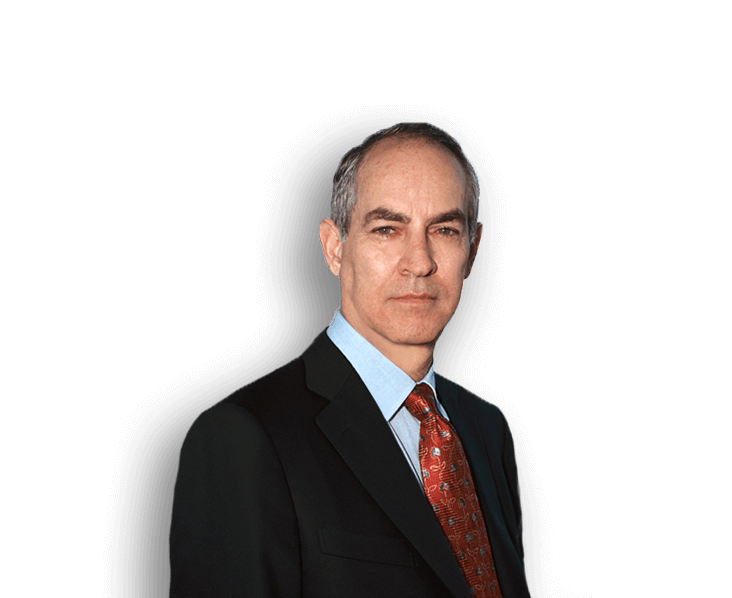
“These are bean-counter dynamics,” says lawyer and author of Unsafe on the High Seas Charles Lipcon, who is in talks with several potential Concordia plaintiffs.

January 22, 2012

Cruise ship sex abuse claims probed

Detectives are investigating claims of sexual abuse against children alleged to have taken place onboard two of Cunard's most luxurious cruise liners.

It is claimed that a crew member committed assaults on the Queen Mary 2 and its sister vessel the Queen Elizabeth.

Wiltshire Police confirmed an investigation had been launched and they would be contacting all the parents who they needed to speak to.

The force also said it was working closely with the NSPCC and the children's charity had staff available to speak to parents if they wanted counselling or advice.

The Mail on Sunday reported that detectives started the investigation after a tip-off and that the unnamed man, who is under investigation, lived in Wiltshire.

A Wiltshire Police spokeswoman told the newspaper: "We can confirm we are investigating historical allegations of child abuse by an employee of Cunard cruise liners.

"Inquiries continue. The employee no longer works for the company."

And a force spokeswoman said: "We are unable to confirm any details at this time due to an ongoing investigation. However, we would like to reassure parents and the public that the police will be contacting all of the parents they need to speak to in the course of the investigation.

"If you are still concerned and would like some professional advice then you can call the dedicated NSPCC number 0800 980 4502. The NSPCC have advisors available who are aware of this matter and can assist parents if they have concerns about their children."

Cunard is part of the Carnival Corporation group - owners of the Costa Concordia, which ran aground off the coast of Italy - and operates the Queen Mary 2, the Queen Victoria and Queen Elizabeth cruise liners offering luxurious ocean travel.

January 21, 2012

Cruise Ship Search Off Italy Finds 12th Body, Hard Disk

Navy teams conducting rescue efforts are seen January 21, 2012, near the Costa Concordia cruise ship which ran aground off the west coast of Italy at Giglio island.

Italian media say police divers searching the Costa Concordia cruise liner, which ran aground earlier this month off the Italian island of Giglio, have found a hard disk containing data of the voyage, as another body was pulled from the wreckage, bringing the death toll to 12.

Media reports say the disk retrieved late Saturday may shed light on the role Captain Francesco Schettino played in the disaster. Italian prosecutors are investigating Schettino's role or lack thereof in the rescue operations the night of the disaster

Divers also recovered the body of a woman in a life vest found in the corridor of a submerged section of the 114,000-ton ship.

Rescue efforts are continuing for 20 people still missing. Officials say chances are slim for finding survivors. Authorities say they are also working to remove oil from the vessel to prevent an environmental disaster.

Italy's civil protection agency took command at the site Saturday after the government declared a state of emergency on the small island. The agency's head, Franco Gabrielli, said the environment has already been affected.

"I would like this to be clear: this is not an event where nothing happened," Gabrielli said. "This is a story where a 300-meter-long ship carrying 4,000 people on board, plus all these people needed is in the sea. So the contamination of the environment, gentlemen, has already occurred."

Gabrielli added 2,400 tons of fuel is inside the shipwreck and needs to be removed.

The vessel, which is owned by the U.S.-based Carnival Corporation, ran into a rocky reef, which damaged its hull, and caused the vessel to keel over on its side. Carnival Corporation said it would conduct a comprehensive audit of all of its cruise lines to review safety standards and procedures following the Concordia accident.

January 20, 2012

Modern cruise ships: Are their designs dangerous?

There has been a media sensation surrounding the sinking of the Costa Concordia off the coast of Italy last Friday, perhaps in large part due to the chilling coincidence it happened on the 100th anniversary of the sinking of the Titanic.

As the days have progressed there have been various conflicting reports and conjecture over how this tragedy happened. We have heard a lot about the Captain, who is fast becoming the villain of the story, ignoring orders not to deviate from the planned route and fleeing the ship before others had got to safety. Certainly he has a lot to answer for. Regardless of his actions however, some people are asking how a modern day cruise ship could capsize so easily. Are there serious design flaws?

When the Titanic was built it was the biggest ship in the world at 882 Ft long and weighing 46,328 tonnes. In the 100 years that have passed ships have become even larger. Where the Concordia is only marginally longer than the Titanic at 952 ft long, it is more than double its weight at 112,000 tonnes.
The top-heavy design

If you look at two pictures of the ships there is one noticeable difference: the height. The Costa Concordia is much taller than the Titanic and this has become a modern trend in cruise ships. Much like high-rise flats, it’s a way of fitting as many people as possible into a confined area. Does this top-heavy design make the ship less stable and more liable to capsize?

The union for maritime professionals, Nautilus International, has been very vocal since the accident stating they had been warning that an accident like this was inevitable. Andrew Linington, from Nautilus, wrote in the Guardian about new cruise ship designs, “The number of decks has been increased, with additional leisure facilities, to increase revenue-earning capacity. Additional swimming pools, coupled with a number of slack tanks when in operational service, further reduce vessel stability.”

However, when we spoke to Mark Staunton-Lambert at the Royal Institute of Naval Architects, he seemed to disagree. He claims, though it appears to be top-heavy, in actuality the weight is properly spaced. He says, “It’s not really a question of how tall they are, it is a question of where their centre of gravity is and their centre of buoyancy.”

Was the top-heavy design of the Costa Concordia at fault?

Apparently, the decks above the hull are relatively light compared to the weight of the hull where the heavy engine lies and the weighted keel below. Moreover, there are regulations set in place that have to be followed regarding the weighting of a ship to ensure stability. Staunton-Lambert says that boats that didn’t pass rigid safety tests and adhere to the rules for safe design, “would be breaking regulations, simple as that. The flag state wouldn’t allow it, the classifications designers wouldn’t allow it and the owner would be at fault in even trying to think about it.”

What are the regulations?

In finding out how stringent the regulations are, we contacted the International Maritime Organisation (IMO), and a spokesperson ensured me that under the international convention for Safety of Life at Sea (SOLAS), “all ships had to be designed to ensure they can’t capsize during expected operations”. One feature of design that it insists upon is the compartmentalization of the hull. In Chapter 2, clause 1 of SOLAS it states, “the subdivision of passenger ships into watertight compartments must be such that after assumed damage to the ship’s hull the vessel will remain afloat and stable.”

So why did the Costa Concordia not remain stable after its hull was damaged? We will have to wait for the conclusions of the investigation into the accident in due course but it seems odd that the ship, which would have to have abided by the SOLAS convention in order to sail managed to capsize. I asked Staunton-Lambert. He said, “(it depends) where and how big the hole is in the hull and so just how many watertight compartments were flooded. Make a big enough hole and you can sink any ship. There is also a possibility that the grounding of the vessel may have also contributed to the vessel heeling.”
Is it time to reassess cruise ship design?

Interestingly, the Titanic was one of the first ships to use the innovative new design of watertight compartments throughout the hull with the intention that, if two or three compartments were flooded, the ship would still not sink. When the White Star Line were informed that the Titanic was in trouble, the vice president P.A.S Franklin is quoted to have said, “we place absolute confidence in the Titanic. We believe the boat is unsinkable.” By the time he spoke these words the Titanic had sunk.

Of course, it would be foolhardy to believe that a ship could never sink. The sea is a dangerous place and man cannot control it. Having said that, a reassessment of cruise ship design is needed to make sure that another tragedy like this can be prevented in the future.

January 19, 2012

When is a captain allowed to abandon ship?

"The captain is last to leave a sinking ship": A legally binding rule, or a nautical myth? Last Friday's cruise ship accident off the coast of Italy has once again raised the question.

August 3, 1991: An explosion shakes the engine room of the Greek cruise ship, Oceanos, as it sails off the South African coast. With hundreds of people on board, the ship springs a leak, then begins to list and slowly starts to sink.

At this point, the crew was supposed to jump into action and implement a rescue plan. In the case of the Oceanos, however, most of the crewmembers were the first to leave the ship in the lifeboats, leaving around 200 passengers behind.

Helicopters came to the rescue, and one of the first lifted out of danger was Captain Yiannis Avaranas. Meanwhile, dozens of men, women and children still trapped on the ship were left fearing for their lives.

Later, Avaranas apparently said, "When I give the order to abandon ship, it doesn't matter what time I leave. Abandon is for everybody. If some people want to stay, they can stay."

Chain of command

With his actions, Avaranas was accused of breaking an ancient seafaring law: "The captain is always last to leave a ship in an emergency." But is this an actual regulation, or simply a legend?

Uwe Jenisch, an expert on international maritime law and a professor at the University of Kiel in northern Germany, says there's no clause in any law that specifically states this.

But, he adds, the rule could be deduced from other regulations: "On every ship, one person is in charge. There is a prescribed hierarchy on all ships. The captain alone is responsible at the top. He assumes command. He must direct the evacuation; so long as the ship exists, he is responsible."

Aside from that, it's simply good seamanship for the captain to steer his ship like a father would his family - and that's how the rule developed historically, Jenisch explains. "You can almost speak of customary law. However, it's not written down anywhere," he said.

The International Maritime Organization in London regulates ship security worldwide, but Jenisch says individual countries are responsible for implementing these regulations. In the case of the wrecked Costa Concordia, the Italian government must hold itself to international standards, he adds.

Better by helicopter?

Willi Wittig, vice president of the Federation of German Captains and Ship Officers, also thinks the captain carries the ultimate responsibility for his ship.

But, as Wittig pointed out on German public broadcaster Deutschlandfunk, admittedly this responsibility does not have to be executed from the bridge.

There could be situations, he said, "where perhaps in order to gain perspective, it really would be appropriate to [conduct operations] from off the ship."

Wittig adds, however, that for a captain to leave his ship early, even if it doesn't necessarily make him legally liable, would be highly unusual. In such cases, experts usually refer back to the sailors' code of honor.

In the end, where a captain decides to exercise his duty to his passengers, crew and ship, is up to him. Avaranas, one of the first to be saved by the rescue helicopter, argued this decision allowed him to better conduct the rescue operation.

Though criticized for his decision, Avaranas was acquitted by a London court, and he eventually returned to work as a cruise ship captain.

Holding out for insurance

Abandoned passengers aside, a ship's insurer would be another party that wouldn't be too happy about a captain's early departure. If a ship in distress at sea is abandoned by its crew, then it belongs to those left aboard.

An old seaman's yarn tells of Hendrik Kurt Carlsen, the Danish captain of the US freighter Flying Enterprise, who in 1951 held out all day as the last man on board his ship, which was sinking in the English Channel.

Allegedly, Carlsen stayed on his ship to ensure that the vessel remained the property of the shipping company, a fact still reported by the media decades later.

Cruise ships 'out of control'

Experts today doubt that a captain could direct a cruise ship evacuation by himself, with vessels at their current scale. Speaking to the news agency AFP, Wittig said accidents where cruise ships are involved are so complex that an evacuation can't be controlled by a single person.

Jens Peter Hoffmann, a ship security expert, thinks a smooth evacuation would even be impossible under certain circumstances. "When a ship suddenly tilts 30 to 40 degrees, nothing works anymore," he said recently on the German news program Tagesschau, referring to the Costa Concordia.

In addition, there are often hundreds of personnel on a ship, but generally only 30 to 40 are actual seamen, trained to handle emergencies.

Maritime law expert Jenisch thinks the cruise ship industry today is out of control - ships have simply gotten too big. "It would require a Herculean effort to organize a prompt evacuation of 4,000 to 5,000 people," he said.

Ships with promenade decks, which aid in evacuations, are today in the minority. Cabins are now more likely to have their own balcony, a design feature which impedes access to lifeboats. Larger ships also tend to have many floors, which can further slow an evacuation.

No lessons from Titanic?

Molly Brown honors Titanic captain Jenisch thinks shipbuilding codes need to be reviewed, as current ship designs don't reasonably allow for effective evacuation.

"One notch smaller, one notch saner, one notch more human, that's what's needed," he said.

Jenisch points out that a ship suffering from a big crack in its side, like the Costa Concordia, should not tip over so easily. He says ships should be built to prevent water from spreading throughout the entire vessel.

"Haven't we learned anything from the Titanic?" he asked.

In the case of the infamous "unsinkable" Titanic, which in 1912 struck an iceberg in the North Atlantic, an estimated 1,500 of its 2,200 passengers died in the icy waters. Including, incidentally, Captain Edward J. Smith.

He stayed till the end – and went down with the ship.

January 18, 2012

Search for survivors suspended after wrecked cruise ship shifts

Italian rescue workers suspended operations Wednesday after the stricken Costa Concordia cruise ship shifted slightly on the rocks near the Tuscan coast, creating deep concerns about the safety of divers and firefighters searching for the 22 people still missing.

Premier Mario Monti has offered his first comments since the grounding of the cruise ship off Tuscany, saying such a disaster "could and should" have been avoided and assuring that all precautions were being taken to ensure there is no fuel leak.

Monti also thanked the residents of the tiny island of Giglio, which has a wintertime population of about 900, for opening their doors to to the 4,200 cruise ship refugees who washed ashore Friday night when the Costa Concordia grounded and capsized.

In response to a question at a press conference in London, Monti acknowledged Wednesday concern about a potential leak of the 500,000 gallons of fuel aboard the ship. He says authorities had made limiting and preventing leaks a priority, as well as caring for victims.

The $450 million Costa Concordia cruise ship had more than 4,200 passengers and crew on board when it slammed into the reef Friday off the tiny Italian island of Giglio after the captain made an unauthorized maneuver.

The bodies of five adult passengers -- four men and one woman, all wearing life jackets -- were discovered in the wreckage Tuesday, raising the death toll to 11. Their nationalities were not immediately released.

Hungary's foreign ministry says one of the bodies recovered from the wreck of the cruise ship that ran aground off Tuscany was a Hungarian man, a musician working aboard the ship.

Ministry spokesman Jozsef Toth said Wednesday the body of Sandor Feher, a 38-year-old violinist, was found inside the wreck of the Costa Concordia and identified by his mother in the Italian city of Grosetto. He is the first victim officially identified.

Jozsef Balog, a pianist who worked with Feher, told the Blikk newspaper that Feher was wearing a lifejacket when he decided to return to his cabin to pack his violin. Feher was last seen on deck en route to a lifeboat.

According to Balog, Feher helped put lifejackets on several crying children before returning to his cabin.

Instruments attached to the ship detected the movements early Wednesday, forcing the search to be suspended even though firefighters who spent the night searching the area above water could not detect the movement. No additional passengers or crew were found.

"As a precautionary measure, we stopped the operations this morning, in order to verify the data we retrieved from our detectors, and understand if there actually was a movement, and if there has been one, how big this was," said Coast Guard Cmdr. Filippo Marini.

Officials said they hope the data from the instruments will reassure them that the ship has resettled, allowing the search to resume. The latest victims were discovered after navy divers exploded holes in the hull of the ship to allow easier access.

In addition to the rescue, much of the focus has been on the cruise ship captain's actions during and after the grounding.

In a dramatic phone conversation released Tuesday, a coast guard official was heard ordering the captain, who had abandoned the ship with his first officers, back on board to oversee the evacuation. But Capt. Francesco Schettino resisted the order, saying it was too dark and the ship was tipping dangerously.

"You go on board! Is that clear? Do you hear me?" the Coast Guard officer shouted as the captain of the grounded Costa Concordia sat safe in a life raft and frantic passengers struggled to escape after the ship rammed into a reef off the Tuscan coast.

"It is an order. Don't make any more excuses. You have declared 'Abandon ship.' Now I am in charge."

Jailed since the accident, Schettino appeared Tuesday before a judge in Grosseto, where he was questioned for three hours. The judge ordered him held under house arrest, his lawyer told reporters, and Italian media said he had returned to his home near Naples.

Criminal charges including manslaughter and abandoning ship are expected to be filed by prosecutors in coming days. He faces 12 years in prison for the abandoning ship charge alone.

Schettino has insisted that he stayed aboard until the ship was evacuated. However, the recording of his conversation with Italian Coast Guard Capt. Gregorio De Falco makes clear he fled before all passengers were off -- and then defied De Falco's repeated orders to go back.

"Listen Schettino," De Falco can be heard shouting in the audio tape. "There are people trapped on board. ... You go on board and then you will tell me how many people there are. Is that clear?"

But Schettino resisted, saying the ship was listing and he was with his second-in-command in the lifeboat.

"I am here with the rescue boats. I am here. I am not going anywhere. I am here," he said. "I am here to coordinate the rescue."

"What are you coordinating there? Go on board! Coordinate the rescue from aboard the ship. Are you refusing?" came the response.

Schettino said he was not refusing, but he still did not return to the ship, saying at one point: "Do you realize it is dark and here we can't see anything?"

De Falco shouted back: "And so what? You want to go home, Schettino? It is dark and you want to go home? Get on that prow of the boat using the pilot ladder and tell me what can be done, how many people there are and what their needs are. Now!"

The exchange also indicates that Schettino did not know anyone had died, with De Falco telling him at one point: "There are already bodies now, Schettino."

"How many bodies?" Schettino asks in a nervous tone.

"You are the one who has to tell me how many there are!" De Falco barks in response.

Schettino was finally heard on the tape agreeing to reboard. But the coast guard has said he never went back, and police arrested him on land several hours later.

Italian authorities say 24 passengers and four crew members are missing, including the five bodies found Tuesday. They include two Americans, 13 Germans, six Italians, four French, a Hungarian, an Indian and a Peruvian.

Meanwhile, a Dutch company also said it would be ready to begin operations to pump fuel from the ship to avert a potential environmental disaster. Fire department spokesman Luca Cari said once the all clear is given, the plan is to both resume the search and begin work on pumping the fuel out in tandem.

January 15, 2012

“Reckless Maneuver” Cited as Potential Cause of Costa's Concordia Cruise Ship Accident

Tuscany Coast, Italy, Jan. 15, 2012—Rescuers continue to search the submerged wreckage of the Costa Concordia cruise liner that sank on January 13th, only a few hours after it set sail. The Concordia reportedly had approximately 3,000 passengers aboard, of which 123 were Americans. Another 1,000 crew members were also on the ship.

In addition to 5 confirmed deaths, about 60 people were injured and at least 15 people are still missing, including 2 Americans. Two South Korean passengers on their honeymoon were found earlier today trapped in a cabin and a crew member trapped on the 3rd deck was also rescued via airlift.

The ship allegedly hit the rocks off Italy’s Isola del Giglio and sustained a 165-foot gash that capsized the ship onto its port side.

The ship’s captain, Franchesco Schettino, is being detained for allegedly causing a shipwreck and abandoning the ship before all his passengers had escaped, in addition to manslaughter. Quoted by Italian news agency ANSA, Francesco Verusio, the prosecutor in the city of Grosseto where Captain Schettino was arrested, attributed the accident to a “reckless maneuver.” Several Italian newspapers said the captain may have steered the ship closer to the coast to allow passengers a better view of the island’s lights. The ship capsized only 150 yards from the shore.

Today’s broadcast of “CBS Sunday Morning” cited an additional issue that may have added to the chaos of the evacuation effort. The Concordia apparently didn’t have its “muster”, a dry-run safety drill of emergency evacuation procedures, on January 13th once it set sail. Instead it had the drill “scheduled” for the following morning, the day after the accident occurred, leading many to conclude that the passengers hadn’t been properly prepared for this emergency evacuation.

The CBS report also noted that the ship was allegedly designed to survive this type of damage and provide watertight safety, suggesting that the cruise ship’s design may also have contributed to what a spokesman for Costa’s parent, Carnival Cruise Lines, has dubbed a “terrible tragedy.”

Charles Lipcon, the seasoned maritime lawyer and founder of Lipcon, Margulies, Alsina & Winkleman, P.A., recommended these time-sensitive next steps for the Concordia's affected passengers and their families:

~ Victims of the sinking of the Costa vessel have legal claims that can be brought against the vessel operator.

~ These claims will be governed in large measure by the wording of the passenger ticket, which usually includes a requirement of notice of claim within a short period of time, the filing of a lawsuit within a short period of time and the location where the lawsuit must be brought.

~ Typically Costa requires suit be brought in Genoa, Italy, but there are certain exceptions that might allow for suit to be brought in Florida.

~ Victims and their families should immediately contact an experienced maritime lawyer, especially one who handles cruise line cases.”

Liner Captain Is Questioned in Capsizing Off Italy Coast

GIGLIO, Italy — The captain of the cruise ship that capsized aground near an Italian island, killing at least five people, may have caused the accident by taking the ship too close to the island’s rocky shore, the owner of the vessel said on Sunday, as rescue workers extracted three survivors and two bodies from the wreck.

The captain, Francesco Schettino, 52, of Naples, Italy, was detained for questioning by the Italian police on charges of manslaughter, failure to offer assistance and abandonment of the ship.

On Sunday, Costa Cruises, the ship’s owner, issued a statement saying that “there may have been significant human error” by Captain Schettino that caused the ship, the Costa Concordia, to ground on a rocky outcropping near this resort island on Friday.

“The route of the vessel appears to have been too close to the shore, and in handling the emergency, the captain appears not to have followed standard Costa procedures,” the statement said.

The statement appeared to diverge from the company’s comments on Saturday when it said that the Costa Concordia had followed the normal course it follows “52 times a year.” The company had also commended Captain Schettino, saying he “immediately understood the severity of the situation” and “initiated security procedures to prepare for an eventual ship evacuation.”

Before he was detained by the authorities, Captain Schettino told Italian television that the ship hit a reef that was not on its navigation charts.

About 70 people were injured when the ship capsized, just as a late-seating dinner had begun on Friday night.

Accounts from survivors and witnesses raised questions about whether the ship had veered off course and suggested that the crew was ill-prepared for an emergency.

With 17 of the ship’s 4,200 passengers still listed as missing, rescue workers searched the waterlogged luxury liner on Sunday for survivors and found three, including a couple on their honeymoon. The couple was found inside a cabin, said Luca Cari, a spokesman for the Italian fire brigade that rescued them.

Later, firefighters rescued the ship’s purser by helicopter, hoisting him strapped to a stretcher. The purser, Manrico Giampedroni, 57, from the northwestern region of Liguria, had a broken leg.

Divers searching submerged cabins found the bodies of two elderly men, one from Spain and one from Italy, both wearing life jackets, said Cmdr. Cosimo Nicastro, a coast guard spokesman. The deaths brought the number of people confirmed dead to five.

Among the people still missing were 11 passengers and 6 crew members, said Enrico Rossi, president of the Tuscany region. The United States State Department said Sunday that 120 Americans had been on board and all but 2 had been accounted for.

Through the day, Italian fire brigades circled the massive ship, which lay on its side like a beached whale, with a wide gash just below the waterline and a rock jutting through its hull. The firefighters tapped the hull and listened for any responses from people trapped inside.

Rescuers were focusing their efforts on the part of the ship still above water. “The likelihood that we can find somebody alive in the underwater cabins is very low, so we are aiming at the ones possibly trapped above water,” said Mr. Cari, the fire spokesman.

So far, his crews had searched only a quarter of that area, parts of which are blocked by debris. He said the sunken portion of the ship would be inspected through the porthole windows during the night by divers with flashlights.

On the tiny island of Giglio, some residents had tended to survivors through the night on Friday, offering hot tea and dry clothes. At Mass on Sunday morning at the Giglio Porto church, a priest placed a life jacket, a rope and a rescue helmet on the altar to honor the dead and missing.

“Giglio will no longer be the same,” said Don Lorenzo, the priest. “Let’s us all pray together now for our souls.”

While the investigation continued, residents, many of whom are sailors, had little doubt about the cause of the accident, saying the captain had tried to thread a narrow passage between the rocks that was too small for the 114,500-ton ship.

“We used to get kind of close to the shore to show off its beauty, to entertain passengers,” said Demetrio Mattera, 75, a former cruise ship sailor here. “But never so close.”

Survivors Found Inside Capsized Cruise Ship

The confirmed death toll from the capsizing of Carnival Corp.’s (CCL) Costa Concordia off Italy’s Tuscan coast rose to five today as rescuers continued to search for 15 people still missing. Three people were found alive in the capsized cruise liner.

The ship’s captain has been arrested and accused of manslaughter, abandoning the vessel and causing the shipwreck following the incident on Jan. 13. Two bodies were found aboard the ship today, said Stefano Giannelli, a fire department spokesman, adding to two French tourists and a Peruvian crewmember who are also known to have perished.

About 60 people were also injured after the ship carrying more than 4,000 passengers and crew hit submerged rocks near the island of Giglio in the Tyrrhenian Sea. Many of the survivors spoke of the panic on board when the ship began listing, with some likening the events to those in the film “Titanic.”

Rescue workers evacuated passengers and crew to the nearest mainland port, Santo Stefano, Italy’s Civil Protection Agency said on its website. Rescuers found two South Korean passengers in a cabin inside the ship at 3 a.m. local time today and they saved a crewmember after voices were heard on the third deck, Giannelli, said.

About 60 firemen are deployed in the search operation that will continue “all night long,” he said. Rescuers have searched one third of the ship, Giannelli said.
Prosecutor Probe

Captain Francesco Schettino is being detained for allegedly abandoning the ship “since we know he was in the harbor about midnight,” Francesco Verusio, the chief prosecutor in the city of Grosseto, said in an interview. The ship’s first officer is also being probed, he said. Dozens of people have been questioned so far, the prosecutor said.

Gianni Onorato, general manager of the Costa Crociere line, said the ship had embarked about 7 p.m. from Civitavecchia near Rome on a trip that was scheduled to include stops at ports in France and Spain. The vessel hit the rocks and Captain Schettino, after assessing the damage, decided to secure the ship and gave the evacuation order, Onorato told news channel SkyTG24 in an interview. A Costa Crociere spokesman confirmed the comments.

The number of missing may be as low as 15, including six crewmembers, according to the Tuscany Region Governor Enrico Rossi. Among them are an 84-year-old Italian and a 5-year-old child, la Repubblica said on its website. The U.S. Embassy in Italy said two of the 120 U.S. passengers are still unaccounted for, according to a statement posted on Twitter today.
‘Terrible Tragedy’

“This is a terrible tragedy and we are deeply saddened,” Carnival said yesterday in a statement. Carnival, based in Miami, is the world’s largest cruise line owner, with brands such as Cunard, Princess Cruises and Costa.

The ship probably was on a wrong route, the prosecutor said. The so-called black box was retrieved, Verusio said. Investigators have determined the ship was only about 150 meters (492 feet) from the coast when it hit the rocks, Ansa said.

Captain Schettino said he was the last one to leave the ship, according to an interview broadcast by TGCOM24 before his arrest. The rocks weren’t identified on the navigation maps, Schettino said. The ship was at least 300 meters from the island when it hit the rocks, he said.

The accident was due to a “reckless maneuver,” news Ansa quoted Verusio as saying. Italian newspaper Corriere della Sera said the captain may have steered the boat closer to the coast to allow passengers a better view of the island’s lights.
Scuba Divers

A scuba-diving unit arrived from Genoa today to search for survivors who may be inside the ship, Lieutenant Colonel Italo Spalvieri of the Livorno Air-Naval Rescue unit said in a telephone interview.

Television images broadcast today showed the Costa lying on its starboard side, a portion of the ship underwater and its orange smokestack close to the waterline. The ship was built in 2006 and has 1,500 cabins, according to Costa Crociere’s website. The vessel also had a docking accident at Palermo’s harbor in 2008 because of strong winds, newspaper Il Sole 24 Ore reported.

The ship hit the rocks about 9:45 p.m. as dinner was being served, sending plates and glasses crashing, Italian media reported. Passengers said the situation on board was reminiscent of the film “Titanic,” as the vessel tilted, electrical power was lost and people rushed to find lifeboats. Several passengers interviewed by Italian television channels including SkyTG24 said they were initially told by crew that there only was an electrical problem and it wasn’t an emergency.
‘Roaring Sound’

Cabin steward Deodato Ordona told the British Broadcasting Corp. there was a “roaring sound” before the ship began to shift. He said the vessel leaned to the left and then the right before the captain announced an order to abandon ship.

There were 3,200 passengers on the ship, including 1,000 Italians, 500 Germans, 160 French and 250 from North America, Costa Crociere said. Emergency procedures began immediately and were impeded by the ship’s listing, Costa Crociere said in a statement. The cause of the incident can’t be confirmed, the company said.

The first coast guard boats arrived within 10 minutes of the accident, Air-Naval Rescue Lieutenant Colonel Spalvieri said by phone. The vessel is carrying a large amount of fuel and Costa Crociere has been ordered to start procedures to remove it, according to Cosimo Nicastro, a spokesman for the Italian Coast Guard. The Giglio island is part of the biggest marine park in Europe. Giglio Mayor Sergio Ortelli said in an e-mailed statement that there’s no risk of an oil spill.
Launching the Lifeboats

Fabio Costa, a shop worker on the boat, said it took the crew a long time to launch the lifeboats because the vessel had listed so much.

“We just saw a huge rock, that was probably where the ship hit, and people were having huge trouble trying to get on the lifeboats,” Costa told the BBC. “So at that point we didn’t know what to do, so it took hours for people to get off the ship. It was easier for people to jump into the sea because we were on the same level as that water.

“So some people pretty much just decided to swim as they were not able to get on the lifeboats,” he said.
‘Felt Like’ Titanic

Rose Metcalf, a 22-year-old British dancer who had been performing on the ship and who was winched to safety by a helicopter, told her father it had “felt like the sinking of the Titanic.”

“The ship rolled over on its side, so they had to get a fire hose which they strung between the railings to stop them falling overboard,” Philip Metcalf told the broadcaster in an interview after speaking with his daughter.

“She thought she’d have to make a jump for it as it was dark and cold, like the sinking of the Titanic, but the helicopter then winched her off,” Metcalf said.

The vessel set sail at 7 p.m. Jan. 13 from Civitavecchia near Rome, Costa Crociere said. Its itinerary was to include calls at the Mediterranean ports of Savona, Marseille, Barcelona, Palma de Mallorca, Cagliari and Palermo.

Italian newspapers said that when the vessel was christened in 2006 the champagne bottle didn’t break against the side of the ship, supposedly an omen of bad luck.

Carnival owns 100 ships and has 10 on order. Its brands also include Carnival, Holland America Line, Seabourn, AIDA Cruises, Ibero Cruises and P&O Cruises. The Costa cruise line has 15 ships and sails worldwide.

January 14, 2012

Pool Attendant Allegedly Rapes 14-Year Old Girl Aboard a Royal Caribbean Cruise

It’s the fourth case of a cruise ship sexual assault on an underage girl to hit the news since November. Fabian Palmer, 25, a Royal Caribbean employee, has admitted to having sex with a 14-year-old girl while she was on a cruise with her family during Christmas week.

Palmer has been accused of luring the girl into a men’s locker room on board the Adventure of the Seas cruise ship and having sex with her. He told fellow employees that he thought the girl was 16 years old.
He reportedly first befriended the girl and her family before allegedly raping her. The assault was interrupted when another employee knocked on the locker room door. According to the Baltimore Sun, Palmer has now been indicted on a single count of sex abuse of a minor.
Palmer was born in Jamaica and lives in Malaga, Spain.